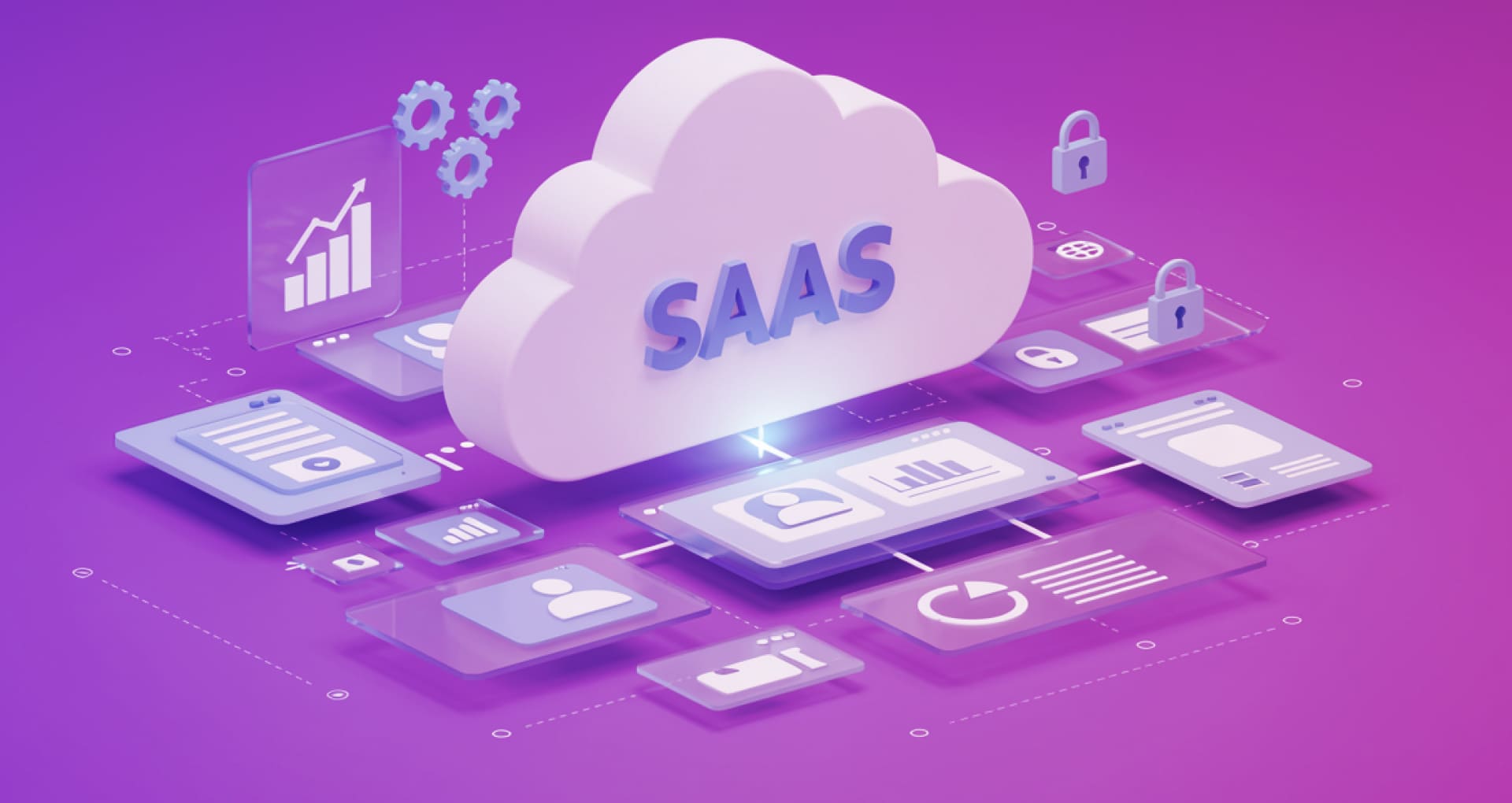
How SaaS Products Are Transforming Modern Businesses
In today’s competitive digital world, businesses need software that is fast, flexible, and future-ready. Gone are the days when companies installed heavy software on local machines, managed complex servers, and spent huge budgets on maintenance. Everything is now moving to the cloud. This shift has given rise to SaaS products, a smarter and more efficient way to build, deliver, and use software. From startups to large enterprises, organizations are choosing SaaS solutions to simplify operations, reduce costs, and scale without limits. At Synkriya Tech, we help businesses design and develop powerful SaaS products that transform ideas into successful digital platforms.
SaaS is transforming modern businesses by offering scalable, cost-effective, and AI-powered solutions. This blog explores key SaaS trends like AI integration, no-code platforms, and green SaaS. It also highlights best practices for selecting the right SaaS tools, overcoming implementation challenges, and industry-specific use cases. Discover how SaaS enhances sales, marketing, and operational efficiency across various sectors.
Why SaaS Products Are Changing Business Operations
Modern SaaS products provide organizations with access to enterprise-grade technology without the challenges of maintaining physical infrastructure. SaaS applications eliminate many traditional IT barriers by hosting software centrally in the cloud. This reduces the need for costly hardware, simplifies software updates, and enables quick deployment. Businesses no longer have to worry about installation, maintenance, or compatibility issues.
Lower Initial Investment
Traditional software often requires significant upfront licensing and hardware costs. SaaS solutions replace these expenses with predictable subscription-based pricing.
Anywhere, Anytime Access
Employees can securely access business applications from any location using internet-enabled devices, supporting remote and hybrid work environments.
Automatic Updates
Service providers regularly release updates, new features, and security improvements without disrupting business operations.
These advantages enable organizations to focus more on growth and less on IT maintenance.
How SaaS Products Improve Cloud Software Adoption
The rapid adoption of cloud software has transformed how organizations deploy and manage technology.
Faster Implementation
Cloud-based applications can be deployed much faster than traditional software installations, allowing businesses to begin using new systems quickly.
Scalable Infrastructure
Organizations can easily increase or reduce resources based on changing business requirements without investing in additional hardware.
Enhanced Collaboration
Cloud platforms enable employees to share information, communicate, and collaborate in real time across different locations.
By leveraging cloud software, businesses gain greater flexibility while reducing operational complexity.
Industry Specific SaaS Solutions Transforming Productivity
Variable industries face variable challenges, and SaaS providers have contributed by forming specialized applications tailored to the requirements. Below are a few examples of how industry-specific SaaS applications enhance productivity:
1. Healthcare
Organizations related to healthcare depend on SaaS platforms for electronic health records (EHR), telemedicine, and patient management. Such solutions sync with the administrative tasks, enhance patient engagement, and ensure regulatory compliance. By automating appointment scheduling, billing, and secure data sharing, SaaS applications make space for the medical staff to concentrate on patient care.
2. Retail and E-commerce
Retailers use SaaS solutions for inventory management, point-of-sale systems, and customer relationship management (CRM). Cloud-based SaaS platforms enable real-time stock tracking, personalized marketing campaigns, and seamless omnichannel sales, leading to higher conversion rates and customer loyalty.
3. Manufacturing
In manufacturing, SaaS applications have a back to the supply chain management, quality control, and predictive maintenance. Such tools optimize the workflows of production, decrease downtime, and increase collaboration between suppliers and manufacturers, improving overall operational productivity.
4. Financial Services
Financial institutions mainly make use of SaaS for risk management, tracking compliance, and onboarding of customers. SaaS applications ensure security and scalability, solutions which are scalable which assist the meet stringent regulatory needs during the delivery of fast, customized customer experiences.
5. Education
Educational organizations mainly take up SaaS learning management techniques and online classrooms to enhance distance learning and student engagement. SaaS platforms make course management simpler and help educators track progress and customize the content.
Subscription Software Makes Technology More Affordable
The popularity of subscription software continues to grow because it offers financial flexibility and predictable costs.
Pay-As-You-Grow Model
Businesses only pay for the users and services they need, making budgeting easier and reducing unnecessary expenses.
Lower Maintenance Costs
Software providers manage updates, infrastructure, and maintenance, allowing internal IT teams to focus on strategic initiatives.
Continuous Innovation
Subscription models ensure organizations always have access to the latest features, performance improvements, and security enhancements.
This approach enables businesses of all sizes to adopt modern technology without significant capital investment.
SaaS Products Support Digital Transformation
Digital transformation depends on technology that enables innovation, efficiency, and business agility. Modern SaaS products provide the flexibility organizations need to modernize operations.
Business Process Automation
Many SaaS platforms automate repetitive workflows, improving operational efficiency, and reducing manual effort.
Data-Driven Decision Making
Integrated analytics and reporting tools help organizations monitor performance and make informed business decisions.
Better Customer Experiences
Customer relationship management, support platforms, and personalized services become easier to manage through cloud-based applications.
Rapid Innovation
Businesses can quickly adopt new capabilities without lengthy implementation of projects.
SaaS plays a central role in helping organizations respond to changing customer expectations and market conditions.
Choosing the Right SaaS Solutions for Your Business
Selecting the right SaaS solutions requires evaluating both current and future business needs.
Security and Compliance
Choose providers that offer robust security features, data encryption, and compliance with industry standards.
Integration Capabilities
Applications should integrate seamlessly with existing ERP, CRM, HR, accounting, and productivity platforms.
Scalability
The solution should support business growth without requiring significant redevelopment or infrastructure changes.
Vendor Support
Reliable technical support, regular updates, and product innovation are essential for long-term success.
A well-planned SaaS strategy helps organizations maximize return on investment while minimizing operational risks.
Future Trends Shaping SaaS Products
Technology continues to evolve rapidly, influencing the future of cloud-based software.
Emerging trends include:
- AI-powered business applications
- Low-code and no-code platforms
- Intelligent workflow automation
- Industry-specific SaaS platforms
- Advanced cybersecurity capabilities
- Predictive analytics
- Multi-cloud integration
Organizations adopting these innovations will gain greater efficiency, flexibility, and competitive advantage.
Conclusion
Modern businesses require technology that is scalable, cost-effective, and easy to manage. SaaS products provide exactly that by combining cloud accessibility, flexible pricing, automatic updates, and enterprise-grade security.
Whether through cloud software, subscription software, or comprehensive SaaS solutions, organizations can streamline operations, improve collaboration, and accelerate digital transformation. Businesses that embrace SaaS today are better prepared for future growth and innovation.
Ready to Build or Modernize Your SaaS Solution?
At Synkriya Tech, we help businesses design, develop, and implement secure, scalable SaaS applications tailored to their unique operational needs. From product strategy to cloud deployment, our experts deliver solutions that drive measurable business value.
Talk to Synkriya today and discover how SaaS can accelerate your business growth.
FAQ (Rich Snippet Optimized)
1. What are SaaS products?
SaaS products are cloud-based software applications delivered over the internet through a subscription model. Users can access them without installing software locally, making deployment, maintenance, and updates easier.
2. How do SaaS products benefit businesses?
SaaS products reduce upfront costs, improve scalability, enable remote access, simplify maintenance, and support collaboration. They also help businesses adopt new technologies faster while reducing IT management efforts.
3. What is the difference between cloud software and SaaS?
Cloud software is a broad category of applications delivered via the cloud, while SaaS is a specific software delivery model where users subscribe to applications hosted and managed by a service provider.
4. How do SaaS solutions support digital transformation?
SaaS solutions streamline business processes, automate workflows, improve collaboration, integrate with enterprise systems, and provide real-time analytics, helping organizations innovate and respond quickly to changing business needs.